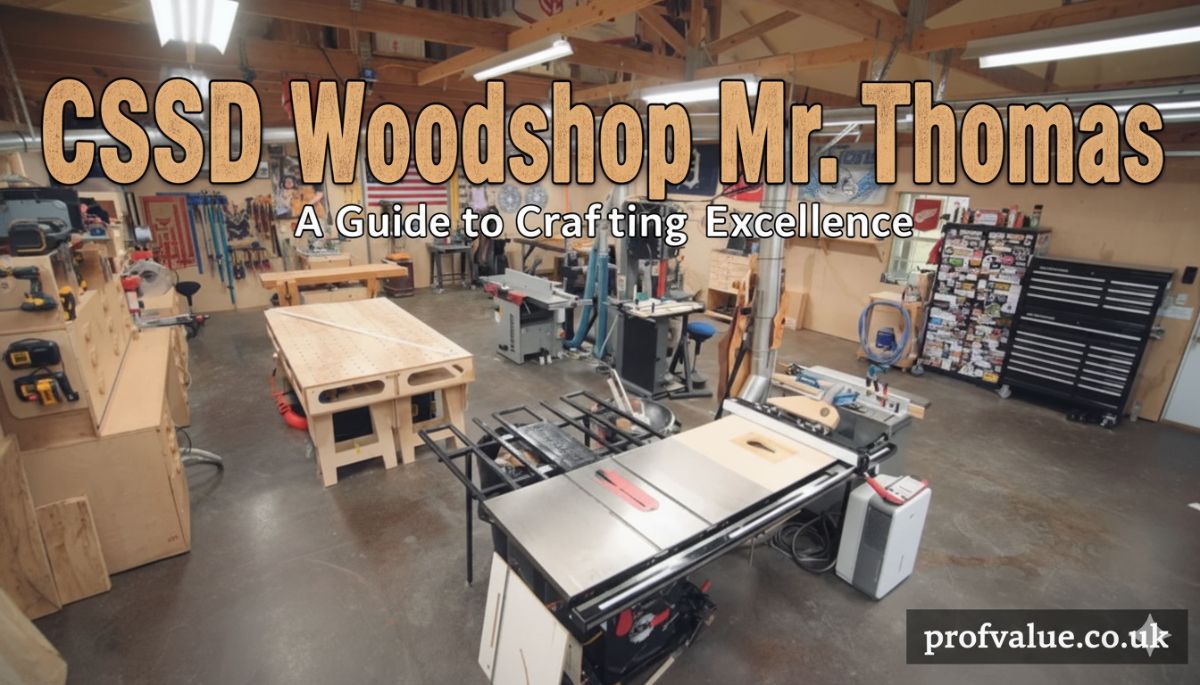
Walking into a woodshop for the first time can feel like stepping into a world of endless possibilities. The scent of freshly cut wood, the sight of tools neatly arranged, and the hum of machinery all signal a place where creativity comes to life. At the Clark County School District (CCSD), the woodshop program offers students a unique chance to learn practical skills, and one name often associated with this experience is Mr. Thomas. This guide will explore the world of the CCSD woodshop Mr. Thomas leads, showing how it shapes students’ skills and futures. We will cover everything from safety rules and tools to the amazing projects students build and the benefits of this hands-on class.
The woodshop program within the Clark County School District is more than just a class; it is a hands-on learning environment where students trade screens for saws and digital concepts for tangible creations. These programs are designed to teach students the art of woodworking, a skill that combines creativity with precision. In a typical CCSD woodshop, students learn how to operate various tools safely, read blueprints, and transform raw lumber into finished products. The curriculum often starts with the basics, such as understanding different types of wood and simple joinery techniques, before moving on to more complex projects. This practical education provides a valuable break from traditional classroom learning, allowing students to engage their minds and bodies in a different, highly rewarding way.
When students talk about their favorite hands-on classes, one instructor who often comes up is Mr. Thomas. Known for his passion for woodworking and his dedication to student success, Mr. Thomas has become a key figure in the district’s vocational education. He brings years of experience and a patient teaching style to the workshop, creating an atmosphere where students feel comfortable learning and experimenting. His approach is not just about teaching students how to use a saw or a sander; it’s about instilling a sense of pride and accomplishment. Mr. Thomas guides students through each step of the process, from initial design to the final coat of finish, ensuring they understand the “why” behind every technique. The CCSD woodshop Mr Thomas runs, is a place where students build confidence alongside their projects.
In an academic world often focused on test scores and digital literacy, hands-on classes like woodshop play a crucial role in providing a well-rounded education. These courses, known as Career and Technical Education (CTE), help bridge the gap between academic knowledge and real-world application. Woodshop teaches critical thinking, problem-solving, and spatial reasoning in a way that textbooks cannot. Students learn to visualize a project in three dimensions, plan the steps needed to build it, and troubleshoot issues as they arise. This type of learning supports different cognitive styles and can be especially beneficial for students who thrive in a practical environment. The U.S. Department of Education highlights the importance of CTE programs in preparing students for a wide range of high-wage, high-skill careers.
The skills acquired in a woodshop class extend far beyond just cutting wood. Students develop a diverse set of abilities that are valuable in many areas of life and work.
At its core, the woodshop teaches students the fundamentals of woodworking. They learn to measure accurately, make precise cuts, join pieces of wood together securely, and apply finishes that protect and beautify their work. They become proficient in using both hand tools, like chisels and planes, and power tools, such as table saws and drill presses. This technical knowledge is the foundation for any future in trades or crafts.
No woodworking project ever goes exactly as planned. A piece of wood might split, a measurement might be slightly off, or a joint might not fit perfectly. In Mr. Thomas’s class, students learn to face these challenges without giving up. They are taught to analyze the problem, brainstorm solutions, and adapt their plans. This process builds resilience and patience, teaching students that mistakes are learning opportunities, not failures.
A woodshop is full of powerful tools, which means safety is the number one priority. The first lesson in any reputable program, including the CCSD woodshop Mr. Thomas teaches, is always about safety. Clear and strict rules are in place to protect every student. Before anyone is allowed to touch a machine, they must demonstrate a thorough understanding of the safety protocols. Mr. Thomas ensures that safety is not just a chapter in a textbook but a constant practice. Students are required to pass safety tests and are supervised closely as they begin working with tools. This emphasis on a secure environment allows students to learn with confidence, knowing that they are in a well-managed and safe space.
Here are some of the fundamental safety rules you’ll find in the workshop:
A well-equipped woodshop is essential for a comprehensive learning experience. Students get to work with a wide range of tools, each with a specific purpose.
Beginners start with the fundamentals. Hand tools are introduced first to teach basic principles of woodworking without the intimidation of power machinery. These often include:
As students gain confidence and skill, they are introduced to power tools under strict supervision. These machines make work faster and more precisely. Common power tools include the table saw, miter saw, band saw, drill press, and various sanders. Learning to use this equipment safely and effectively is a key part of the curriculum in the CCSD woodshop Mr. Thomas facilitates.
The pr, projects students undertake are designed to build skills progressively. A beginner won’t be tasked with building a complex cabinet on their first day. Instead, projects grow in complexity as the student’s abilities develop. This structured approach ensures that students are challenged but not overwhelmed. The sense of accomplishment that comes from completing a project, whether simple or intricate, is a powerful motivator.
Here is a comparison of typical projects at different skill levels:
|
Skill Level |
Example Projects |
Skills Learned |
|---|---|---|
|
Beginner |
Small cutting board, simple box, picture frame |
Basic measuring, cutting with hand saws, sanding, simple gluing, and finishing. |
|
Intermediate |
Bookshelf, small table, step stool |
Using power tools, more complex joints (like rabbets and dadoes), and precise assembly. |
|
Advanced |
Small cabinet, Adirondack chair, intricate decorative box |
Advanced joinery (dovetails, mortise and tenon), detailed design planning, and advanced finishing techniques. |
Hands-on learning, or kinesthetic learning, offers numerous benefits that complement traditional classroom instruction.
When students physically engage with a subject, they are more likely to understand and remember it. Building a box teaches geometry concepts far more effectively than just reading about them. The tactile experience of measuring angles, cutting pieces, and fitting them together solidifies abstract ideas into concrete knowledge.
While much of woodworking is an individual effort, many projects also involve teamwork. Students might work together to move large pieces of wood, assist each other with complex assemblies, or share knowledge and tips. This collaborative environment teaches communication and cooperation, skills that are essential in any career path. This is a core value in the CCSD woodshop that Mr. Thomas has cultivated.
For students in the Clark County School District interested in joining a woodshop class, the process is straightforward. Woodshop is typically offered as an elective course for middle and high school students. Interested students should talk to their school counselor during the course selection period to see if woodshop is available at their school and if they meet any prerequisites. Counselors can provide information on the specific curriculum, the teacher leading the course (such as Mr. Thomas), and how to register. Given the popularity of these classes, it’s a good idea to sign up early.
The true impact of a class is best told through the words of the students themselves. Many who have taken a class with Mr. Thomas speak highly of the experience. They often mention how the class taught them not only how to build things but also how to be more patient and meticulous. One student might share a story about the pride they felt bringing home their first project, while another might talk about how the skills they learned helped them get a summer job. These personal stories show that the lessons learned in the CCSD woodshop Mr. Thomas leads go far beyond the classroom walls.
The skills learned in woodshop can open doors to a variety of future pathways. For some, it might spark a lifelong hobby. For others, it could be the first step toward a rewarding career. Industries like construction, furniture making, cabinet installation, and carpentry are always in need of skilled workers. According to the Bureau of Labor Statistics, employment for woodworkers is projected to grow in the coming years. Even for students who don’t pursue a woodworking career, the practical problem-solving skills and work ethic they develop are highly valued by employers in any field. The experience provides a strong foundation for both professional growth and personal enrichment, which can be further explored through resources like ProfValue.
In the end, a woodshop class is about more than just wood and tools. It’s a place for growth, creativity, and self-discovery. The CCSD woodshop Mr. Thomas has developed, stands out as a program that successfully blends technical instruction with life lessons. Students leave his class not just with a finished project, but with newfound confidence, a strong work ethic, and a practical skill set they can use for the rest of their lives. By providing a space where students can learn by doing, programs like this empower the next generation of builders, makers, and innovative thinkers. It’s an investment in hands-on education that pays dividends in competence and character.
1. Do I need any previous experience to join a woodshop class?
No, beginner-level woodshop classes are designed for students with no prior experience. The curriculum starts with the very basics, including safety and how to use simple hand tools, before moving on to more complex skills.
2. What kinds of safety precautions are in place?
Safety is the most important aspect of the woodshop. All students must pass safety tests before using any equipment. Rules include wearing safety glasses at all times, securing loose clothing and hair, and never using a machine without proper training and supervision.
3. What is the average class size for the CCSD woodshop Mr. Thomas runs?
Class sizes are kept manageable to ensure every student receives adequate supervision and personalized instruction, especially when working with power tools. This focus on a low student-to-teacher ratio is critical for maintaining a safe and effective learning environment.
4. Can I take home the projects I make in class?
Yes, in most cases, students are able to take home the projects they complete. This allows them to showcase their hard work to family and friends and serves as a tangible reminder of the skills they’ve learned.
Copyright 2026 Site. All rights reserved powered by site.com





No Comments